Every Relationship Contains Power and Consent
Most people are already in a D/s dynamic. They are just navigating it without language, consent, or clarity.
I often look to the animal kingdom to understand humanity, not because humans are simple, but because animals are honest. They do not pretend power does not exist, they do not moralize hierarchy, and they do not shame instinct. They organize themselves around what works for survival, cohesion, and continuity.
Across species, there is pecking order, leadership, submission, and consequence. Wolves follow a lead pair not because they are oppressed, but because the pack survives more effectively when someone holds direction. Lions move as a pride because coordinated strength feeds everyone. Birds negotiate rank, access, and proximity through clear, observable signals. There is little confusion and no pretending, only structure that serves the whole.
D/s Exists in Every Relationship
Dominance and submission exist in every relationship, not as a kink or a bedroom role, but as a function of how humans organize themselves. Every relationship has patterns of initiation, tone-setting, pacing, and adaptation. Sometimes these roles shift fluidly and sometimes they stabilize over time, but they are always present.
Even relationships that describe themselves as equal still negotiate who leads during stress, whose needs shape decisions, who holds emotional containment, and who yields when conflict arises. D/s does not mean one person always dominates and the other always submits. It means power is always moving, and someone is always influencing the direction of the system. D/s is not something added to relationships; it is something revealed when we stop pretending power is absent.
Power Exists Whether We Name It or Not
Humans often like to believe they are above this reality. We use softer language and speak about equality, partnership, freedom, and autonomy. These values matter deeply, but they do not erase the presence of power. Every relationship contains influence, every group has leaders whether formal or informal, and every dynamic has someone shaping pace, tone, and direction.
The difference is not whether power exists, but whether it is conscious. When power goes unacknowledged, it becomes chaotic and leaks out through resentment, manipulation, withdrawal, or control disguised as care. When power is denied outright, people still feel it in their bodies, even if they lack language for what is happening. I have watched relationships heal when power was named and held with care, and I have watched them fracture when power was ignored or denied.
D/s Is Not About Sex
Dominance and submission are not inherently sexual. They are relational roles rooted in trust, responsibility, and consent, with sex being only one place where these dynamics become more visible. D/s shows up in parenting, leadership, teaching and learning, intimacy, and community. Anytime one person or system holds structure and another engages with that structure, a power exchange is taking place.
Healthy D/s is intentional power exchange. It asks who is leading in this moment, what responsibility comes with that role, what consent has been given, how safety is maintained, and how feedback is received. This is not domination through force, but leadership practiced as stewardship.
Submission Is Not Weakness
In the animal world, submission is not failure; it is communication. It signals trust in the structure, safety within the group, and a lack of need to fight for control. Submission conserves energy, strengthens bonds, and allows groups to function without constant internal conflict.
The same principles apply to humans. The nervous system responds to clear, trustworthy leadership by down regulating threat and conserving energy. When leadership is consistent and attuned, bodies soften and connection deepens. When leadership is chaotic, absent, or unreliable, bodies brace and relationships strain. When submission is chosen and held by someone capable, it becomes a source of grounding rather than vulnerability.
Dominance Is Responsibility, Not Entitlement
In nature, leaders are rarely the loudest or the cruelest. They are the most attuned to the survival and cohesion of the group. A dominant who cannot hold responsibility quickly loses legitimacy, and a leader who harms the pack does not remain leader for long.
Human dominance should follow the same logic. True dominance requires emotional regulation, self-awareness, accountability, the capacity to repair harm, and a willingness to be challenged. Without these qualities, dominance collapses into control, and control is not leadership. It is fear attempting to pass itself off as authority.
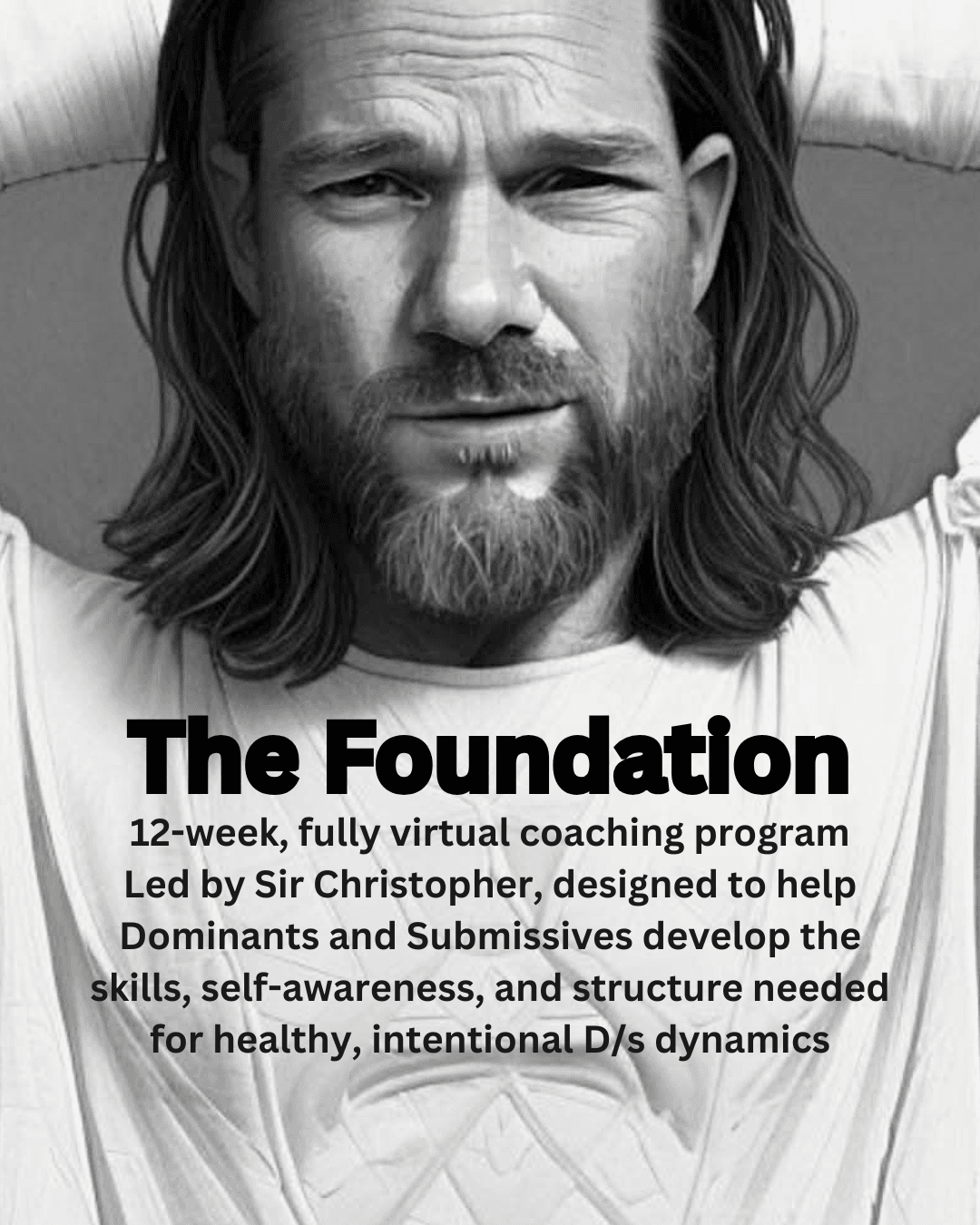
This is why my D/s coaching work exists.
Not to impose roles, scripts, or aesthetics, but to help individuals and couples become literate in power. To slow down unconscious dynamics and make them intentional. To teach how leadership can be held with responsibility, how submission can be chosen without loss of self, and how structure can create safety rather than constraint.
Most people are already in a D/s dynamic. They are just navigating it without language, consent, or clarity.
My work is about naming what is already there, building structure where there has been confusion, and helping people relate to power in a way that creates trust, intimacy, and stability rather than harm.
If this perspective resonates, you can learn more about my D/s coaching program here:
www.sirchristopher.org/coaching
The real question is not whether you are in a D/s dynamic, but whether you are participating in it consciously.